What are the elements of a story?
The five basic elements of a story are setting, character, plot, conflict, and theme. Three additional elements, point of view, tone, and style, help shape how the story is told. Together, these eight elements give a story its structure, meaning, and emotional impact.
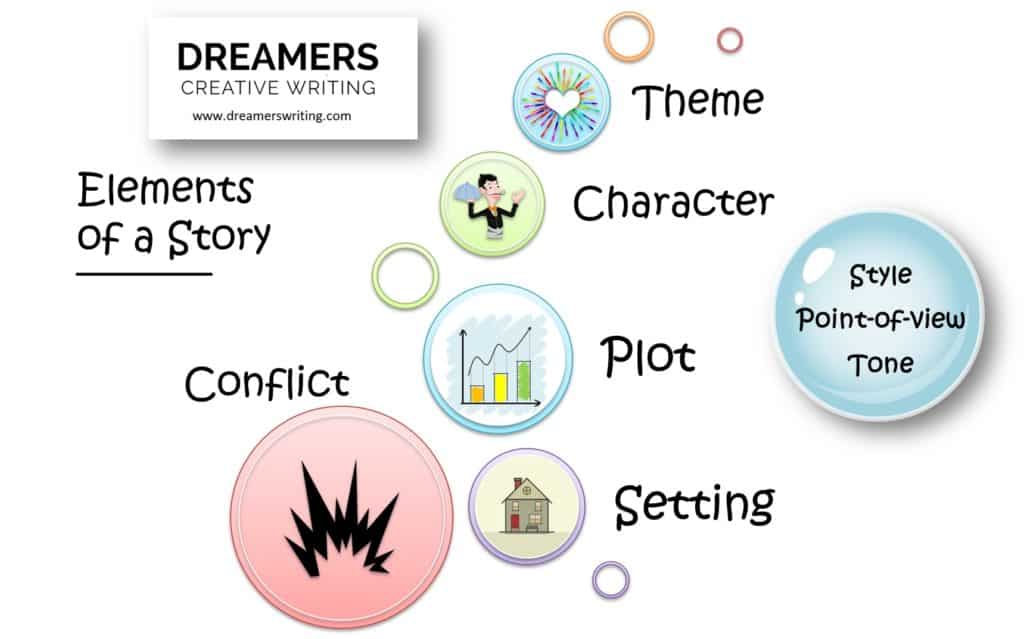
Basic elements of a story
The five basic elements of a story are setting, character, plot, conflict, and theme. They establish where the story takes place, who it follows, what happens, what problem drives the action, and what larger idea the story explores.
1. Setting
Setting is where and when a story takes place. It includes the physical location and time period, as well as the social and cultural conditions in which the characters live. Setting can create atmosphere and mood, influence how characters behave, and shape both the conflict and plot.
Example: A story set in an isolated farmhouse during a winter storm will create different possibilities and pressures than the same story set in a crowded city during summer.
Questions to ask: Where and when does the story take place? How does the environment affect the characters and what happens to them?
2. Character
A character is a person, animal, or personified object in a story. Most stories have a main character, with secondary characters playing supporting roles. Characters are shaped by their personalities, motivations, relationships, experiences, and backstories. They may be dynamic and change throughout the story, or remain largely static.
Example: A writer staying alone at the farmhouse may be independent and determined, but also reluctant to ask for help. Those traits will influence how the character responds when the winter storm creates a problem.
Questions to ask: Who is the story about? What does the character want, and what personal qualities or past experiences influence their choices?
3. Plot
The plot is the sequence of events that makes up a story. A traditional plot often includes exposition, rising action, a climax, falling action, and a resolution. These stages create structure, develop the conflict, and move the story towards its conclusion.
Example: The writer arrives at the farmhouse, becomes trapped by the storm, discovers that the power has failed, and must decide whether to remain inside or seek help. Each event leads to the next and increases the pressure on the character.
Questions to ask: What happens in the story? How does each event lead to the next, and which event marks the story’s turning point?
4. Conflict
Conflict is the problem, challenge, or struggle that drives a story. It gives the character something to respond to, pursue, or overcome. Common forms include character versus character, character versus nature, character versus society, and character versus self. A story may contain both external and internal conflict.
Example: The winter storm creates an external conflict, but the writer’s reluctance to ask for help creates an internal one. Solving the immediate problem also requires the character to confront a personal limitation.
Questions to ask: What problem does the character face? What stands in the way, and what will happen if the conflict is not resolved?
5. Theme
Theme is the larger idea, insight, or question explored through a story. It is not simply the subject of the story or a moral stated directly to the reader. Instead, theme develops through the characters, conflict, plot, setting, and the choices the characters make.
Example: The farmhouse story might explore the theme that independence can become isolation when a person refuses to rely on others.
Questions to ask: What larger idea does the story explore? What does the character’s experience suggest about that idea?
Advanced elements of a story
Point of view, tone, and style influence how readers experience a story. They shape who tells the story, the emotional impression it creates, and the way the writer uses language to communicate it. These elements work with the five basic elements to give a story its distinct voice and effect.
6. Point-of-View
Point of view identifies who is telling the story and what information the reader can access. Common choices include first person, second person, and third person. Third-person narration may be limited to one character’s knowledge or omniscient, allowing the narrator to know the thoughts and experiences of multiple characters.
Example: If the farmhouse story is told in first person, readers experience the storm through the writer’s thoughts and limited knowledge. An omniscient narrator could also reveal what is happening elsewhere and whether help is already coming.
Questions to ask: Who is telling the story? What can the narrator know, and how does that perspective limit or expand what the reader understands?
7. Tone
Tone is the attitude or emotional quality conveyed by the narrator’s language. It may be serious, humorous, hopeful, anxious, detached, or reflective. Word choice, sentence structure, imagery, rhythm, and other writing decisions all contribute to tone. Tone can also influence the mood, or feeling, experienced by the reader.
Example: The farmhouse story could have a tense tone created through urgent language and short sentences, or a reflective tone that focuses on the storm’s stillness and the character’s thoughts.
Questions to ask: What attitude or emotional quality does the narration convey? Which language choices create that tone?
8. Style
Style is the distinctive way a writer uses language to tell a story. It includes word choice, sentence structure, dialogue, description, pacing, and techniques such as metaphor, simile, and symbolism. A writer’s style helps create the story’s voice and affects how readers experience its characters, setting, and events.
Example: Short, direct sentences could make the farmhouse story feel urgent, while longer, descriptive sentences could emphasize the atmosphere and the character’s isolation.
Questions to ask: What makes the language distinctive? How do the writer’s choices affect the story’s pace, clarity, and emotional impact?
How the elements of a story work together

The elements of a story do not work independently. Setting creates the conditions in which the plot unfolds. Characters make choices in response to conflict, and those choices move the plot forward. Point of view, tone, and style shape how readers experience these events, while theme develops through the story as a whole.
In the farmhouse example, the setting creates isolation, the character resists asking for help, and the conflict forces that character to make a difficult choice. The resulting events form the plot and explore a theme about the difference between independence and isolation. The point of view, tone, and style determine how the reader understands and feels about that experience.
Is backstory an element of a story?
Backstory is not usually included among the basic elements of a story, but it can support several of them. A character’s earlier experiences can explain their motivations, relationships, fears, and choices. Backstory may also influence the story’s conflict, plot, and theme.
Writers can reveal backstory through narration, dialogue, memories, or details introduced as the story unfolds. It should provide information that helps readers understand the present story rather than interrupting it unnecessarily.
Learn more about the importance of backstory in storytelling.
Story elements worksheet and related resources
- Download our printable elements of a story worksheet.
- Learn more about the plot of a story.
- Read The Elements of Story: Field Notes on Nonfiction by Francis Flaherty.
- Explore The 7 Main Story Elements and Why They Matter by Jerry B. Jenkins.
*This article updated on August 7, 2026.